


Symptoms of varicose veins on the legs and treatment depend on each other.If varicose veins on the legs are just beginning to develop, they can be stopped by taking special medications and using creams.They help weakened blood vessels regain their previous tone.If the signs of varicose veins in the legs appear more strongly, i.e. if spider veins and severe swelling appear, it is worth resorting to hardware therapy that will restore normal blood circulation.
Not all patients know how to properly treat varicose veins of the legs without surgery.Some suggest that taking herbs and using homemade ointments can help, but this is only a small part of the methods of treating varicose veins on the legs that are effective in the initial stages of the disease.If the symptoms of varicose veins on the legs become permanent, you need to consult a doctor who will prescribe the necessary medications and give advice on how to treat a particular patient.We will also consider the most popular methods for treating varicose veins of the lower extremities (VLVC).
Drug therapy
As already mentioned, the shape of varicose veins affects the features of their treatment.In the first stage, doctors try to get by with drug therapy.One of its advantages is the lack of direct surgical intervention.But even if varicose veins of the lower extremities have reached the second stage, you cannot stop taking medications.They help improve blood flow to varicose veins and prevent further stretching of the vessel wall.
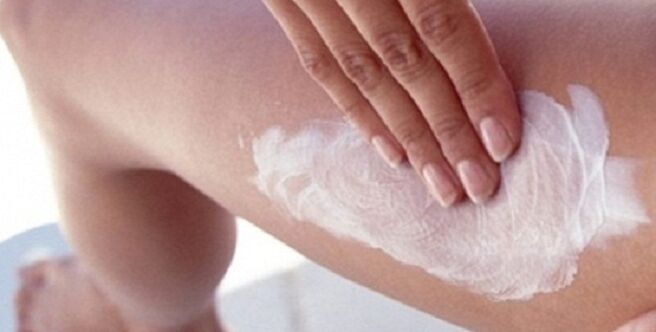
Ointments and gels
These funds increase the tone of the blood vessels in the legs.They can be used to treat veins that lie near the surface of the legs.If the disease affects deep veins, ointments and gels will not help, as they cannot penetrate the muscle barriers.Treatment of varicose veins on the legs is carried out with the following medications:
- An ointment whose main active ingredient is a flavonoid (a derivative of rutin).Taking tablets with this active ingredient is considered the most effective, but the gel can also help cope with the initial stages of varicose veins.
- Medicines based on horse chestnut.Apply to damaged vessels twice a day.
- Gel to eliminate the feeling of fatigue in the legs.Has a cooling effect.
- Another herbal preparation, the main active ingredient of which is an extract of grape leaves.
- A drug containing a synthetic derivative of vitamin P.Strengthens blood vessels, reduces swelling and helps treat rosacea.
Tablets and capsules
If the expansion of the veins in the legs progresses or upon examination it turns out that the patient has weak and thin veins, doctors prescribe tablets.
Injections
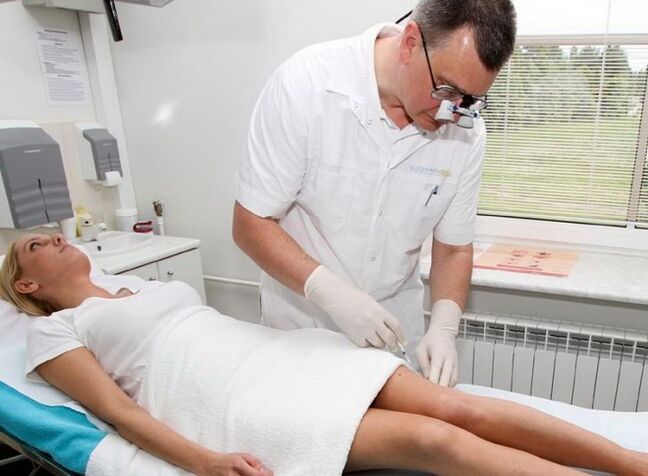
If small veins are affected in the patient, the treatment of varicose veins of the lower extremities can be carried out by administering various medications that have an adhesive effect on the vessels.Most often, products based on iodine or synthetic sclerosing substances are used.The advantage of these drugs is that they do not cause thrombosis, but simply burn the vessel wall.Injections with animal proteins are also possible, but are only used very rarely.
Proceedings
Enlargement of the veins of the lower extremities cannot always be cured with conventional injections and medications.In advanced stages of the disease, hardware intervention on the affected vessels is required.The essence of all procedures is to stop or remove the affected vein.If the patient has contraindications to the use of lasers, nitrogen and other chemicals, the destroyed vessels are surgically removed.When treating varicose veins, the patient may be referred to:
- sclerotherapy;
- phlebectomy;
- radiofrequency ablation;
- compression therapy;
- laser coagulation;
- endoscopic dissection;
- Cryosurgery;
- Ozone therapy.
Each treatment method has positive and negative properties and is only suitable for a specific type of varicose veins.Hidden varicose veins of the lower extremities are rarely treated surgically.In this case, the only effective way to eliminate it is to apply clamps to the entire surface of the vein.The operation is very complex and is extremely rarely carried out if vasodilatation is life-threatening.
Sclerotherapy
Varicose veins of the lower extremities can be treated with sclerosing agents.They damage the vessel, which leads to its further drying out.Strands form after the introduction of the sclerosant after 2-4 months, but patients notice the first benefits of the procedure 10-15 days after the operation.The biggest advantage of this procedure is the lack of skin incisions.There is also a minus.Not all patients have a damaged vein removed from the bloodstream.In about 30% of patients, regeneration occurs and the disease progresses.Stages of sclerotherapy:
- The area where the solution is applied is disinfected.
- If necessary, anesthesia will be administered.
- The phlebologist uses a syringe with a thin needle to inject into enlarged veins and spider veins.
- After the procedure is completed, an elastic bandage is placed around the leg and the patient is sent on a 40-minute walk.
- The elastic bandage is removed by the doctor one day after the procedure.
Phlebectomy
If conservative treatment of varicose veins in the legs does not help at all, there is a risk of chronic venous insufficiency (CVI) of the lower extremities, and minimally invasive methods of influencing the veins do not bring results, doctors refer the patient for phlebectomy.This surgery is performed to remove large bundles of overly dilated areas of blood vessels.The patient must be anesthetized.Most often, doctors resort to combined phlebectomy.The process is carried out as follows:
- Crossectomy.A small incision is made in the patient's groin, where the base of the damaged superficial vein is located.The venous valve is cut and the vessels are tied off.
- The second incision is made in the lower leg or ankle area.Its length is 1.5 cm.A metal probe is inserted into the damaged vein through the resulting hole.It is attached to the opposite end of the vessel.If it is not possible to penetrate the entire vein to the end, several incisions are made and several probes are inserted.
- Strip.The damaged vein is pulled out through the incision.The tip of the tip passed through the probes acts as a knife.It frees the vessel from surrounding tissue.
- Miniphlebectomy.If the vein is generally healthy, but there are nodules, they are removed through special points marked for incisions.The veins and tributaries are tied off.
- Sew.The puncture and puncture sites are then sutured, compression bandages are applied and the patient is transferred to the ward.
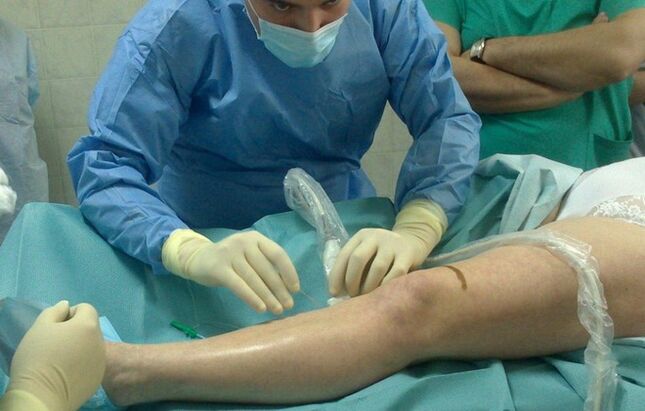
Phlebectomy may include one or more or all stages.The number of procedures depends on the degree of neglect of the disease.Modern clinics practice laser phlebectomy.The core of the operation remains the same, but a laser is used instead of special surgical instruments.The advantages of this method are obvious.The incisions themselves become smaller and the patient's rehabilitation goes faster.However, it cannot be used in all stages of varicose veins.
Radiofrequency ablation
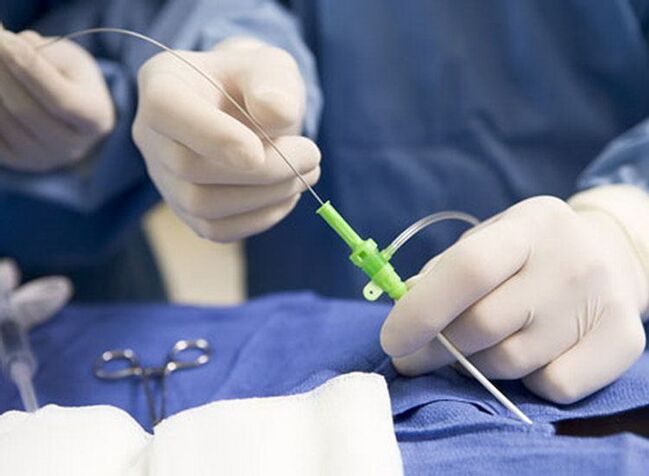
To get legs without varicose veins, you don't have to sacrifice the beauty of your skin.Radiofrequency ablation allows you to remove damaged blood vessels in just a few minutes.Through a small puncture, high-frequency radio waves are passed into the veins via a special needle.They injure the vascular wall, which leads to its reduction in size and replacement with connective tissue.The patient was only in the hospital for 1 day.
Compression therapy
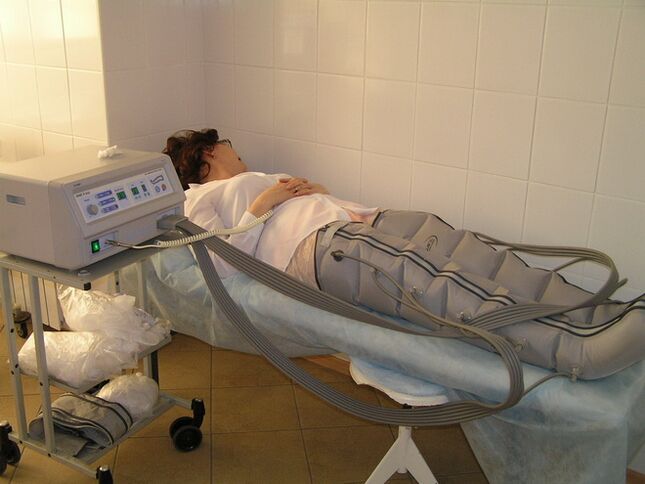
This procedure is performed for varicose veins in the legs in the initial stages.A special rubber suit is put on the patient and then air is pumped into him.Artificial pressure is applied to the veins, which helps restore their tone.Some patients find that after compression therapy, the amount of cellulite on their body has decreased.
Laser coagulation
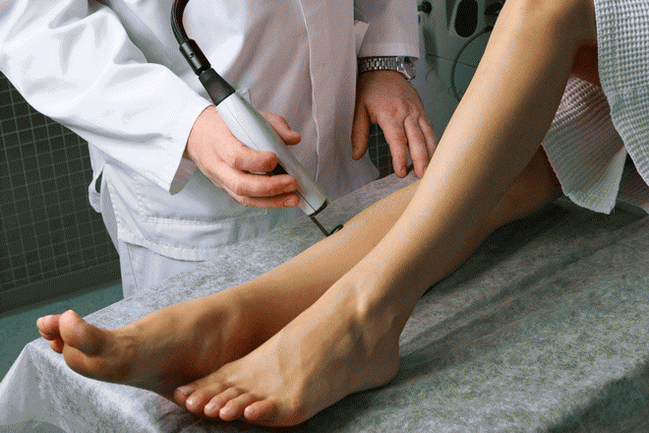
This is a modern method of treating leg veins.Because it involves minor tissue trauma, many patients attempt to undergo this particular procedure.The essence of the operation is that a laser light guide is inserted through a small opening into the damaged vein, thereby closing it.The doctor must carefully move the device along the entire length of the vessel.There are no scars or other side effects after the operation.
Endoscopic dissection
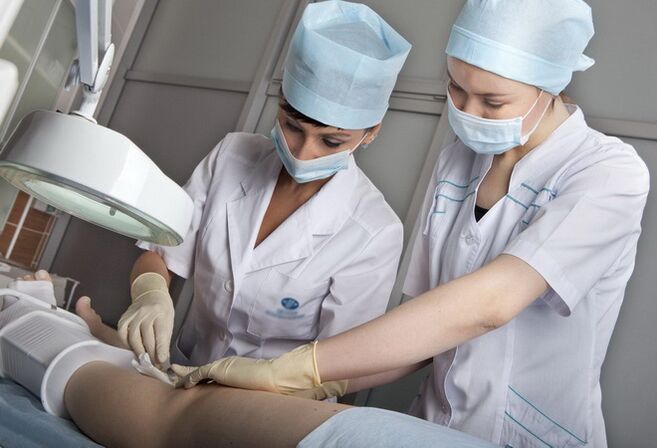
This method of surgical intervention is used to expand the sural and perforating veins.With varicose veins of the lower extremities, patients often develop trophic ulcers.Damage to the sural or perforating veins alone cannot lead to the occurrence of skin diseases.This disease develops against the background of circulatory failure.To normalize it, endoscopic dissection is performed.Stages of the procedure:
- The lower leg is incised in the upper third.The cutting width is 2 cm.The surgeon also opens the fascial sheath and then uses a spatula to create a cavity into which the endoscope and instruments are inserted.
- Isolation and removal of the vein.
- Gasless method.The veins are isolated and cut off by the surgeon under optical control.
- Gas methodCarbon dioxide is injected into the wounds.A cavity is created in the wound in which all the veins to be removed are revealed.
- Sew.
cryosurgery
Low temperatures can be used to treat veins in the legs.The method is considered absolutely safe, but is rarely used because... There is no guarantee that varicose veins will completely disappear after such therapy.Contrary to popular belief, the operation does not use chemicals but rather a cryoprobe.It cools to a certain extent, causing the vessel to burn.An inexperienced doctor can damage tissue adjacent to the vessel during surgery.
Ozone therapy
When the first symptoms of varicose veins of the lower extremities appear, some doctors recommend resorting to physiotherapy treatment.The essence of the procedure is that ozone is injected intravenously.The drug is strictly dosed, as an excess can cause damage to blood cells.The effect of ozone therapy is the same as other treatment methods that damage blood vessels.
Medical knitwear
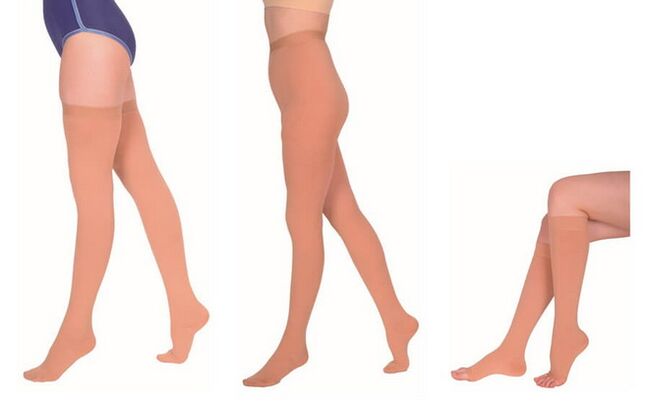
If you have symptoms of varicose veins in your legs, doctors recommend wearing compression stockings for treatment.A doctor should help you choose knitwear and compression levels.For segmental varicose veins of the lower extremities, wearing level 2 compression underwear is recommended.His blood pressure will be 32 mmHg.If you are just thinking about how to deal with varicose veins on your legs, but you have no visible signs of the disease, you can try purchasing underwear with the first level of compression.Knitwear with 3 and 4 degrees of compression can be purchased in pharmacies only with a doctor's prescription.
Traditional medicine
Extreme caution should be exercised when treating varicose veins on the legs as prescribed by a doctor.First, some plants and herbs thin the blood.If your platelet and hemoglobin levels are normal, they cannot be treated.Secondly, no fees can replace drug therapy.You cannot refuse to take medication.The following recipes are considered effective for varicose veins:
- A mixture of garlic and oil.The garlic is minced together with its peel into a paste and then mixed with 2 tablespoons of butter.The resulting composition is applied to the diseased veins overnight, parchment paper is placed on top and wrapped with a scarf.
- Potato.5 raw root vegetables are peeled and then grated.The resulting gruel is used instead of an ointment.It is left on the feet for 4 hours and then washed off with warm water.
- Kalanchoe tincture.Kalanchoe leaves are washed, placed in a jar and filled with a 70% alcohol solution.Let the composition brew for 14 days.After that, the resulting tincture is smeared on the feet every day.The procedures are carried out over a period of 3-5 months.
Hirudotherapy
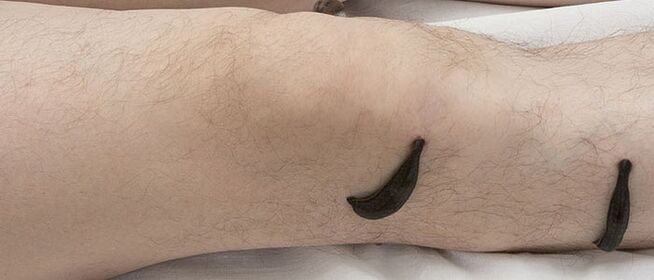
At the initial stage of varicose veins of the legs, patients with “thick” blood are referred for treatment with leeches.The effect of the procedure is not immediately visible.It is necessary to complete at least 5-6 sessions to notice the first improvements.Two leeches are placed on the area most damaged by varicose veins and then a few more leeches are placed along the entire length of the vein.The course of treatment is repeated every 3 months.
Prevention of varicose veins
First of all, everyone must learn to sit correctly.Twisting the lower limbs and more traditional crossing of the legs causes blood flow in the veins to be disrupted.As a result, the vessels expand under the influence of physical forces and varicose veins of the lower extremities appear.The good news is that at this zero stage, the progression of the disease can be reversed, but not all people are ready to give up the habit.Methods for preventing varicose veins of the superficial veins of the lower extremities include:
- Hike.The more a person walks, the better the blood circulation in the veins.In addition, this method helps get rid of excess fat reserves and increases overall endurance.
- Massage of feet and legs.This can be done during work breaks.You need to massage your toes, shins and thighs slowly and lightly.Do not put too much pressure on your legs, because... if you have a congenital tendency to varicose veins, the condition of the blood vessels may worsen.
- Contrast shower.It is beneficial for the whole body, but if you do not feel comfortable taking it, you can only treat your legs.
- Compresses with herbal decoctions.Chamomile, calendula, St. John's wort and other plants normalize blood circulation and relieve muscle tension.
- Rubs/wraps based on apple cider vinegar.This substance is found in almost all kitchens.Apple cider vinegar has an irritating effect on blood vessels.This causes them to contract, which helps restore the muscle cells in the walls.However, this method cannot be used if you have injuries on your legs.Apple cider vinegar is not used pure, but mixed 1:1 with water.
- Wear comfortable clothing and shoes.You must choose your items based on size.Don't wear jeans that are too tight or high heels with uncomfortable lasts.
- Gymnastics.Office workers can perform exercises to accelerate blood circulation even while sitting in a chair.You can simply straighten your legs or bend them at the knees, but it is better to walk close to your workplace.
Diet and nutrition
A balanced diet is required at all stages of varicose veins.Foods high in cholesterol should be excluded.If the patient loves beef or pork, he should not fry them in oil.It is allowed to bake or cook fatty meat.Doctors recommend eating more foods containing proteins, magnesium, calcium and selenium.These include beans, almost all types of fruit and walnuts.
Therapeutic exercises for varicose veins
Non-surgical treatment of varicose veins of the lower extremities involves performing certain physical exercises.Squats, leg swings and all exercises that involve working with your own weight are permitted.It is necessary to completely exclude from training exercises with large weights (50-60 kg), flexion and extension of the trunk on a chair, as well as long runs.The most effective exercises against varicose veins:
- Scissors and a bicycle.Perform the exercise at an average pace while lying on the floor.
- Rotational movements of the legs.You need to stand up, grab the support with your hand, lift one leg, take it to the side and start twisting it.5 movements inwards and 5 movements outwards are carried out.
- Roll from toes to heels while standing.
Stretching and warm-up exercises always start with the upper body.You can not immediately start active training or just warm up your legs, because... this will not help improve the condition of the vascular system.You can also walk on the spot.If your body mass index is significantly higher, it is recommended to first lose weight and then start exercising.